

biennale malaise
on Vincenzo De Cotiis, Lawrence van Hagen, and Rothko

It’s a great week to be a partisan of Venetian decadence!!!!!!
The 61st Venice Biennale is unfolding across La Serenissima and Minimal Legends at Palazzo Giustinian Lolin is my exhibition of note.
The lagoon has long been rendered the intellectual and aesthetic epicenter of the international art world. And this year, Minimal Legends is restoring emotional temperature to Minimalism without sacrificing intellectual rigor.
Presented by the Vincenzo de Cotiis Foundation in collaboration with Lawrence Van Hagen, the exhibit belongs emphatically to collections that recalibrate how art suffuses space, history, and time itself.
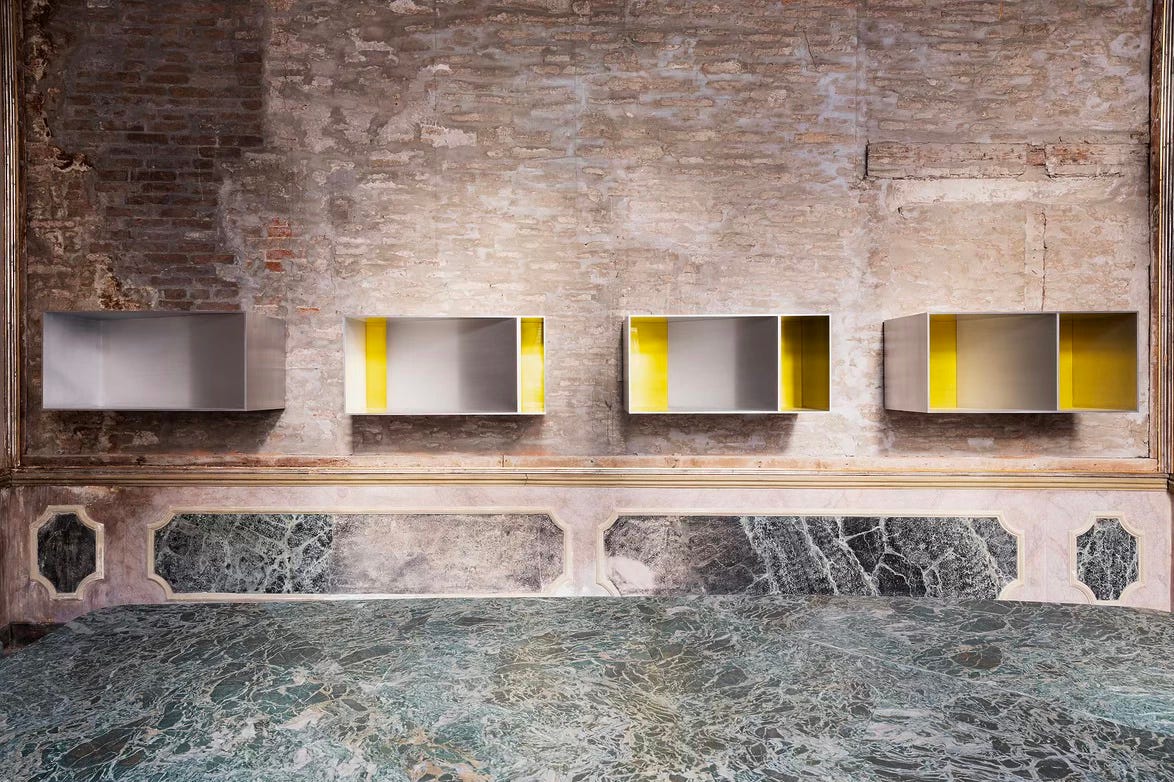
What I find so extraordinarily affecting about the exhibition (apart from the lucid caliber of its participants—Donald Judd, Agnes Martin, Mark Rothko, Dan Flavin, Richard Serra, Sol LeWitt, Bridget Riley, Carl Andre, Frank Stella) is the profoundly Venetian condition through which the works are encountered.
Venice metabolises art. The city possesses an almost metaphysical relationship to materiality, where erosion, sedimentation, humidity, oxidation, and memory operate not as degradations but as aesthetic agents in their own right.
Time remains visibly suspended upon every surface. And the foundation and van Hagen alike have understood how to cultivate something so intellectually persuasive within the genealogy of the Biennale itself.
Since its inception in 1895, the Biennale has functioned not merely as an exhibition platform but as a fluctuating theatre of cultural power. Nationalism, modernity, diplomacy, commerce, and aesthetic ideology have operated in volatile proximity. Lawrence Alloway, writing on the Biennale in the late 1960s, understood the institution less as a singular exhibition than as an immense communicative organism—an unstable “cellular structure” whose very heterogeneity mirrored the fractured condition of twentieth-century culture.
Minimal Legends feels beautifully startling against this sedimentation. Rather than succumbing to the centrifugal excess that has often characterised Biennale culture, the exhibition achieves concentration. Its curatorial intelligence lies in its refusal of spectacle for spectacle’s sake. Instead, it orchestrates a series of exquisitely controlled spatial and philosophical correspondences between Minimalism, post-war abstraction, Venetian architecture, and poetics of material decay.
Such correspondences feel especially potent in Palazzo Giustinian Lolin.
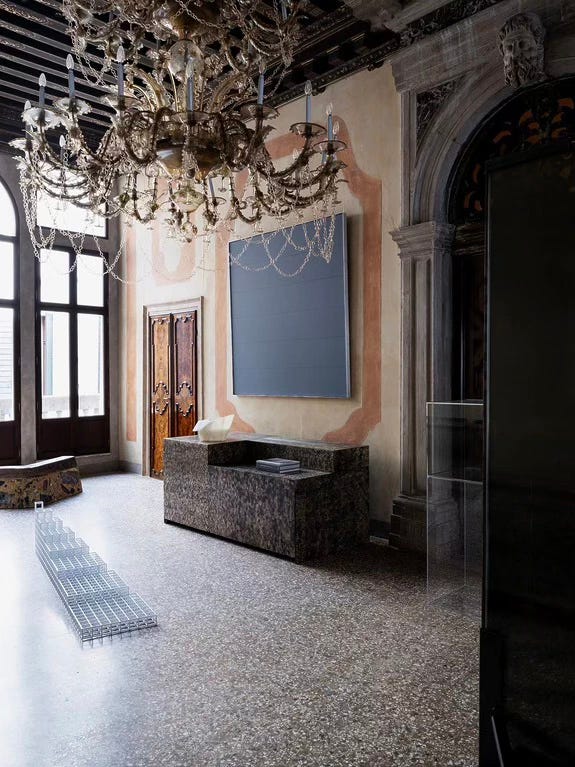
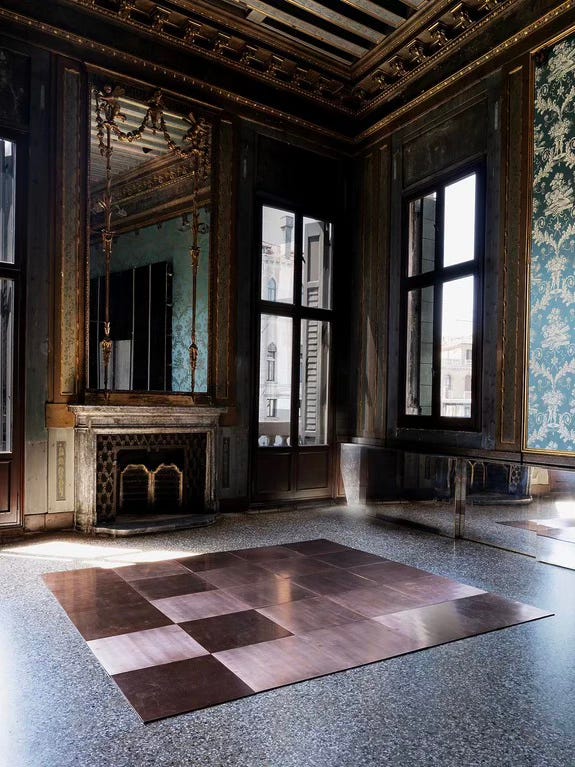
The palazzo’s interiors—veined marble, fatigued frescoes, oxidised metals, aqueous light, terrazzo floors softened by centuried movement—fundamentally dislocate the conventional phenomenology of Minimalism. One becomes acutely aware that the movement’s customary museological habitat, the antiseptic neutrality of the white cube, has always imposed a conceptual rigidity upon works that are deeply sensorial.
Venice releases them from that rigidity.
Donald Judd’s serial aluminium progressions (which elsewhere can verge upon doctrinaire severity) acquire a sensuality against the chromatic fatigue of Venetian plaster. Dan Flavin’s fluorescent interventions aren’t industrial incursions into space, but part of atmospheric dialogue with diffused canal light and shadowed baroque volumes. Agnes Martin’s grids, suspended delicately between asceticism and transcendence, assume an almost monastic stillness within interiors already saturated by silence.
What the exhibition says with remarkable sophistication is that Minimalism isn’t concerned with reduction by itself. Its deepest preoccupation has always been perception: attention, the ethics of looking and the phenomenology of presence.
And I suppose I’ve always understood Venice as exquisitely disciplined perception.
It seems to resist immediacy and cannot be apprehended through speed, nor consumed through image alone. It’s experienced in accumulation: aqueous reflections trembling across ceilings and the subtle collapse of geometry along sinking facades. The city unfolds as a continuous choreography of visual instability where atmosphere fractures both ornament and orientation.
The sophistication of Minimal Legends is the irony in Venice as the antithesis of contemporary visual culture’s obsession with clarity and instant legibility.
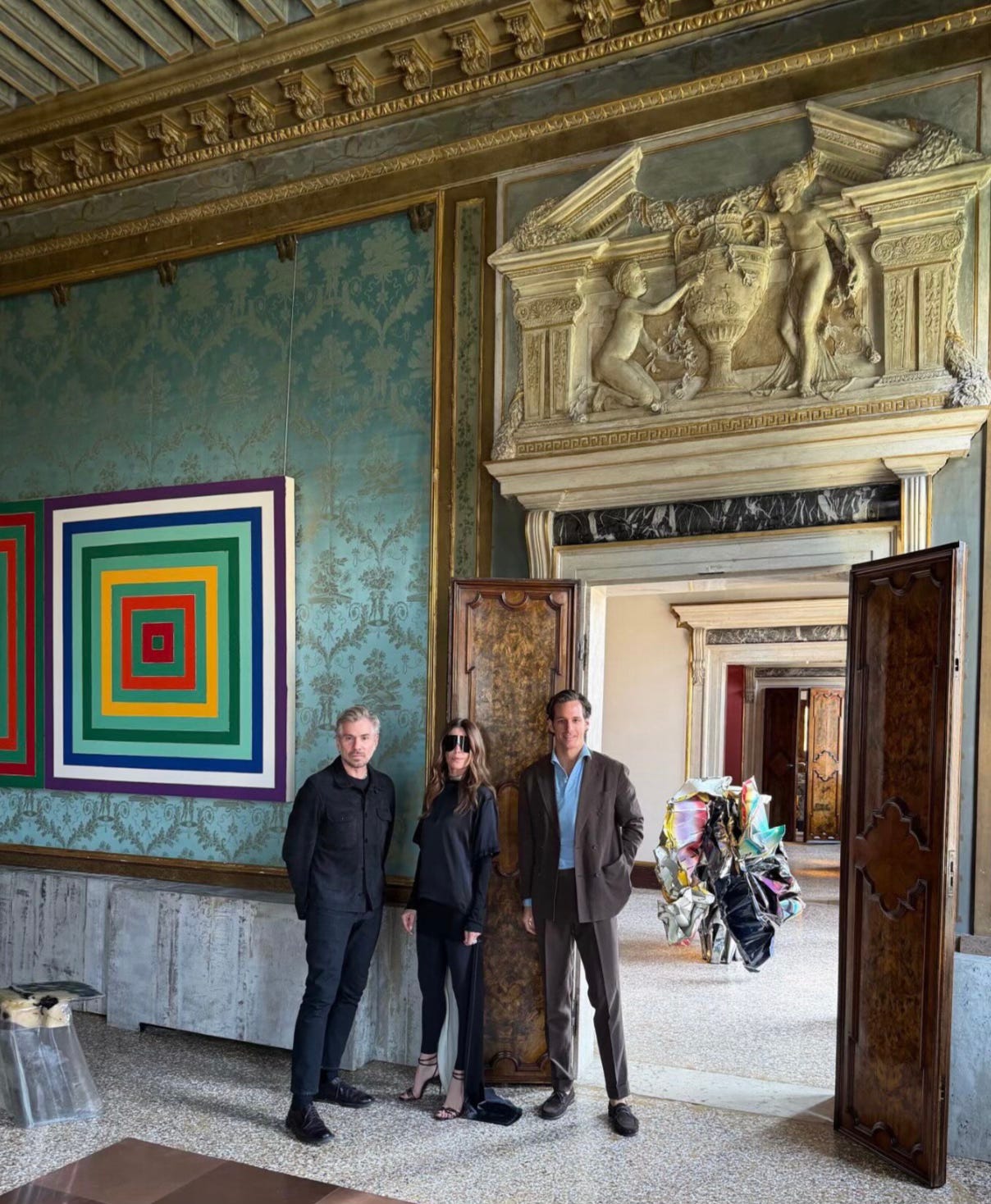
Notably, the exhibition is done in collaboration with Lawrence Van Hagen of LVH Art, and his genius is felt everywhere. The exhibition is distinguished curatorially in its extraordinary confidence in restraint. There is no frantic discursiveness or dependence upon spectacle masquerading as intellectualism. Instead, one senses a deeply European curatorial literacy underpinning the presentation.
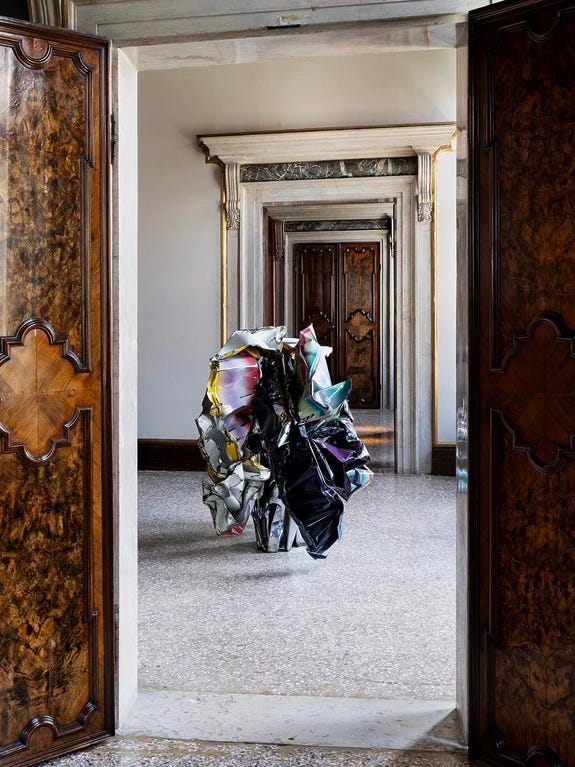
Van Hagen’s sensibility is perceptible precisely in the exhibition’s orchestration of tempo, proportion, and silence. The works aren’t reduced to trophies despite their institutional significance. Rothko’s chromatic atmospheres breathe. Carl Andre’s floor interventions move bodies with liturgical subtlety. And Chamberlain’s compressed steel forms introduce corporeal tension into otherwise meditative sequences. You become attentive to objects, but perhaps more importantly, to their psychological pacing—to the emotional consequence of adjacency, reflection, shadow, and spatial pause.
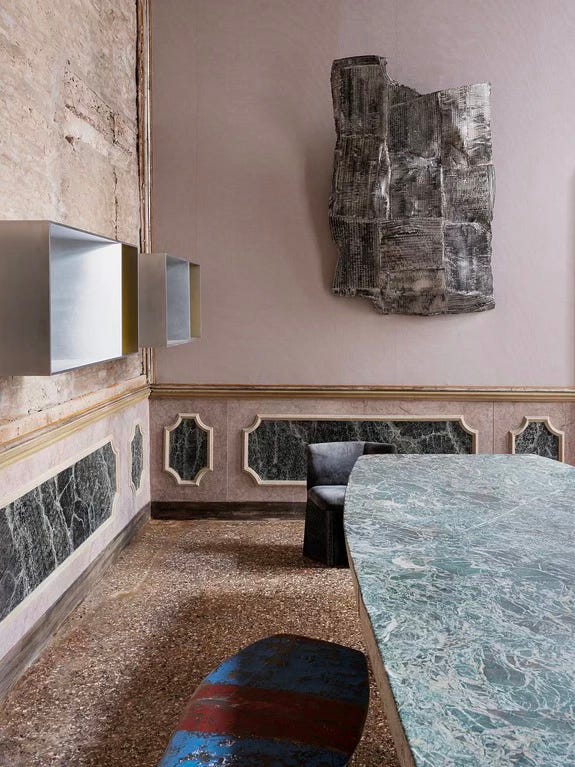
His smartest contribution is the refusal to impose an excessively didactic framework upon the works. Venice itself becomes the exhibition’s primary intellectual condition and the city’s aqueous melancholy and material exhaustion transform the presentation from a survey of post-war abstraction into a meditation on material spaciality.
And Vincenzo de Cotiis has cultivated entropy with him. He has intervened with Murano glass, resin, stone, and oxidised metal. He affirms Venice as having privileged stratification over perfection. That it’s built upon accretion — Byzantine opulence coexists with architectural fatigue and Gothic tracery dissolves into salt erosion.
Perhaps this is why the city continues to exert such hypnotic force over artists, collectors, architects, and aesthetes across generations.
And me.
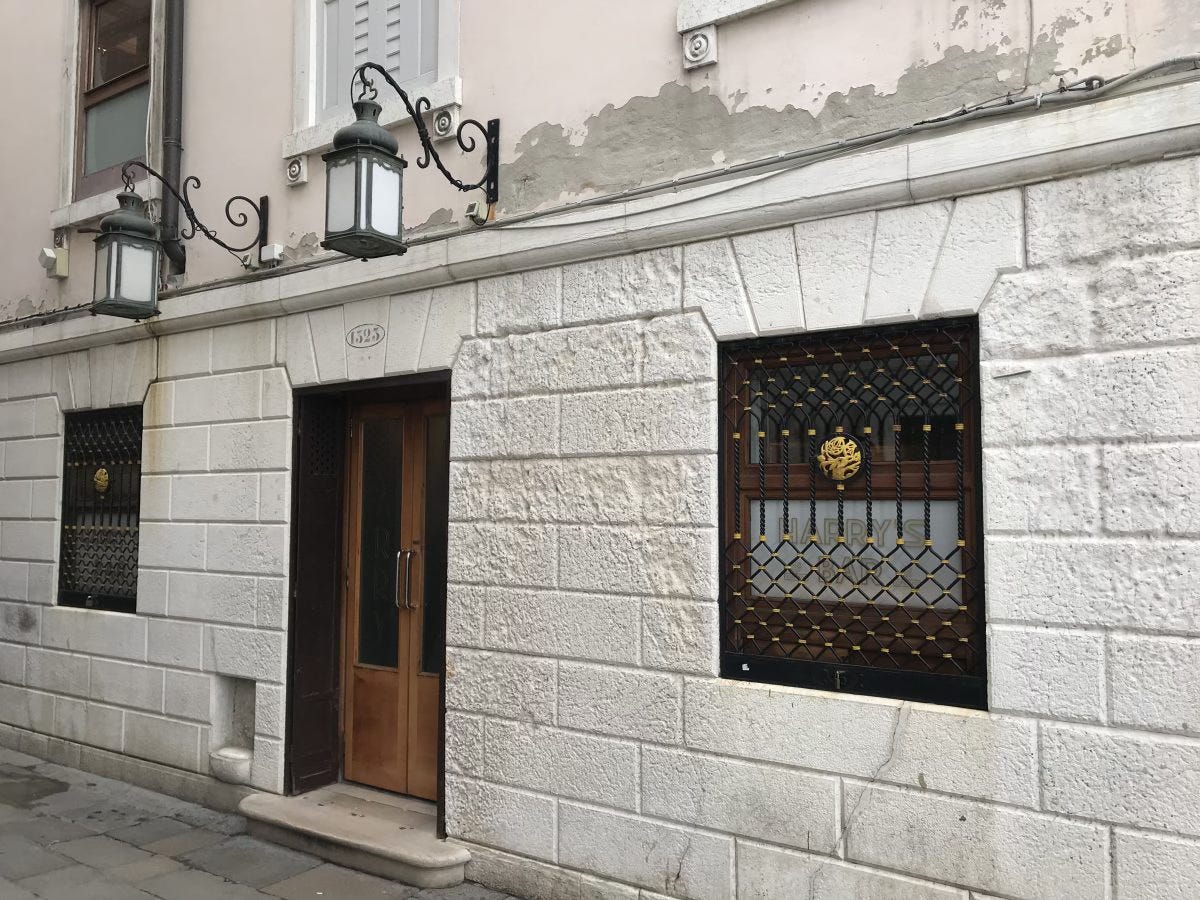
So here’s, as always, to Venice and all its grandeur. And to being more consistent about writing these (or trying).
Xx
Excellent piece! Learned so much and you really bring the art and the city to life